
Rottweiler Care Guide for Filipino Owners
Joint health, cardiac care, and responsible Rottweiler ownership in the Philippines.

Rottweilers are at elevated risk for aortic stenosis, a heart valve narrowing that restricts blood flow from the heart. Many dogs don't show symptoms until the disease advances. So, it's important to get annual heart check-ups from your vet starting at age 3. You should include listening with a stethoscope and performing an echocardiogram if you detect a murmur. Also, be ready to handle exercise limits for your Rottweiler if they have aortic stenosis. Being informed about these aspects can help ensure your dog's health and prevent serious issues.
The Rottweiler is a strong, loyal, and smart working breed. It needs a confident owner and regular training. In the Philippines, Rottweilers handle the heat better than breeds with thick coats. However, their large size leads to joint and heart issues, plus a risk of bloat. This means they need special care. This guide explains how to monitor health and care for a Filipino Rottweiler. These strategies help keep them healthy and support a long life.
Common Health Issues for Rottweiler in the Philippines
Understanding your Rottweiler's health vulnerabilities lets you catch problems early and prevent them from becoming serious.
Hip and Elbow Dysplasia
Rottweilers have one of the highest rates of hip and elbow dysplasia of any breed. The combination of rapid growth in puppyhood, heavy body mass, and restricted exercise in apartment life creates conditions where dysplasia develops early and progresses quickly. Feed large breed puppy formula through 18 months, maintain lean weight throughout life, supplement with glucosamine and omega-3 from age 1, and avoid repetitive jumping and stair climbing in growing dogs. X-ray evaluation at age 2 gives a clear picture of joint health status.
Osteosarcoma (Bone Cancer)
Rottweilers have a much higher lifetime risk of osteosarcoma. This is an aggressive bone cancer that mainly affects the long bones in the legs. The first sign is usually lameness or swelling of a limb without a known injury. Any unexplained lameness in a Rottweiler over age 5 that persists for more than a week warrants X-rays to rule out bone cancer. Osteosarcoma is aggressive; early detection is critical for treatment options. Maintain regular annual vet check-ups, including physical palpation of the limbs.
Bloat (GDV)
Rottweilers, being large and deep-chested, are susceptible to bloat. Bloat is a serious condition called gastric dilatation-volvulus. It happens when the stomach fills with gas and twists. The condition is fatal without surgery. To prevent this, it is recommended to feed them two smaller meals rather than one large meal. Use a slow-feeder bowl and restrict vigorous exercise for 1 hour before and after meals. Symptoms of bloat in Rottweilers include unproductive retching, a rigid, distended belly, excessive drooling, and restlessness. Seek immediate veterinary attention if these signs appear.
Aortic Stenosis
Rottweilers are predisposed to aortic stenosis, a narrowing of the aortic valve that restricts blood flow from the heart. Mild cases show no symptoms. Severe cases can lead to exercise intolerance, fainting, and sudden cardiac death. Diagnosis is by echocardiogram. Annual cardiac check-ups from age 3 are recommended. A Rottweiler with aortic stenosis should avoid running and other intense exercise. It may also benefit from cardiac medication.
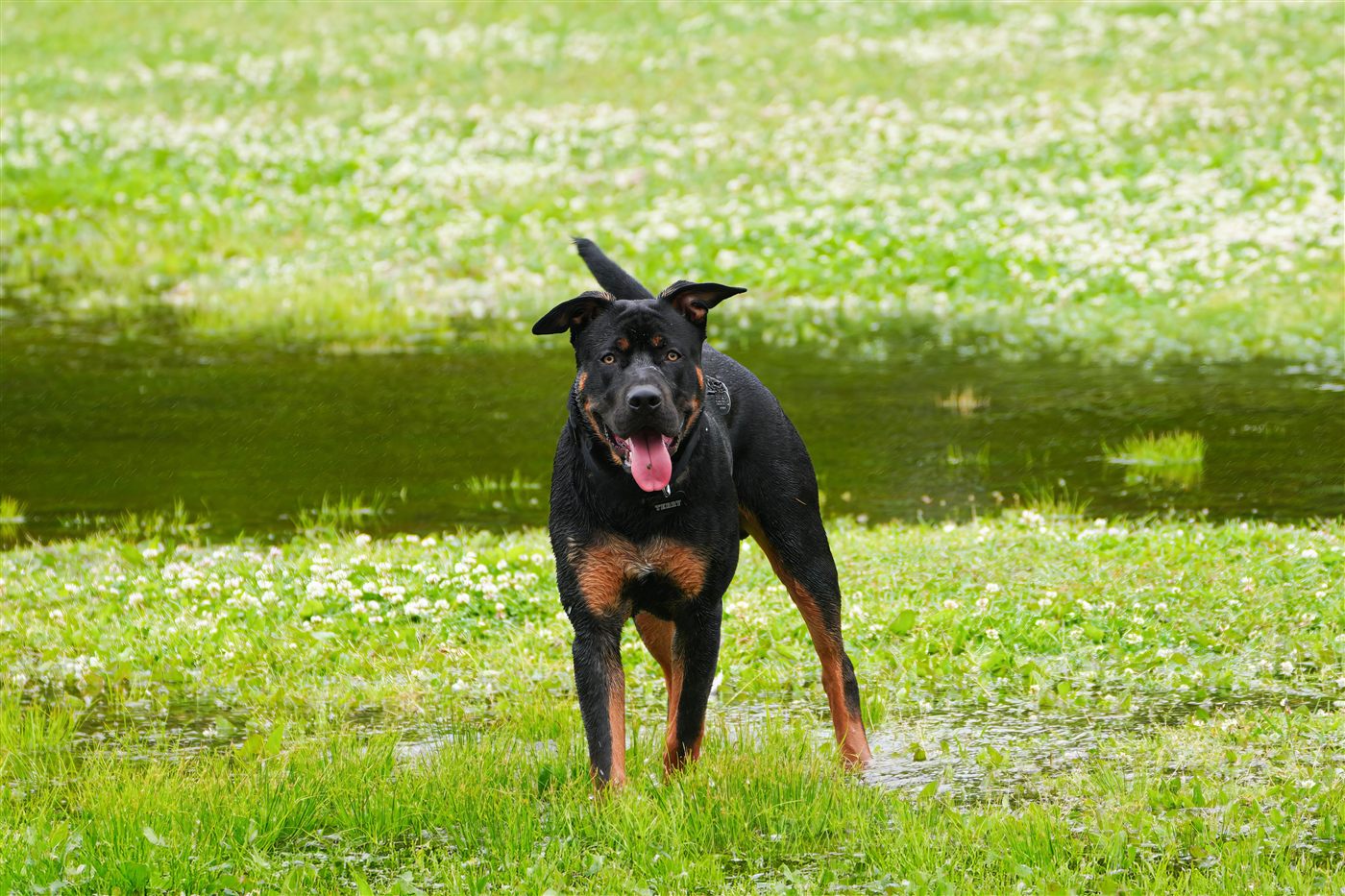
A healthy, well-cared-for Rottweiler, the result of a consistent care routine
Grooming Your Rottweiler in the Philippines
Grooming Requirements
Rottweiler grooming is easy. Their short, dense coat needs just a weekly brush. Use a rubber curry or bristle brush to remove dead hair and spread skin oils. Monthly baths keep your dog's coat clean. They also reduce the sebum build-up that causes the typical Rottweiler odor many owners notice. Weekly ear cleaning and monthly nail trimming complete the routine. The key grooming habit for this breed is a monthly full-body check. Run your hands along each bone and limb. Look for lumps, swelling, or any signs of pain. These could indicate early joint or cancer problems.
Grooming Products for Rottweiler


Prices may have changed since this page was published — please check the product page for the current price and availability.
What to Feed Your Rottweiler
Nutrition Notes
Rottweiler nutrition centers on three needs: a large-breed formula for controlled bone growth, calorie management to prevent obesity that worsens their joint predisposition, and strict anti-bloat feeding protocols. Always feed two measured meals per day using a slow feeder, and restrict exercise before and after eating. Supplement with glucosamine and omega-3 from age 1. Rottweilers in apartment settings are often under-exercised relative to their dietary intake. Adjust portions if weight creeps upward. A healthy adult Rottweiler should have a visible waist and palpable ribs.
Shop for Your Rottweiler at Pet Express
View AllProducts selected by our vet team specifically for Rottweiler needs in the Philippine climate.


Prices may have changed since this page was published — please check the product page for the current price and availability.
View More Rottweiler-Friendly Products →Frequently Asked Questions About Rottweiler Care
Book a Vet Check or Grooming Session for Your Rottweiler
Schedule an appointment with the Pet Express vet team, in-store or at a branch near you.
Book Now